“We are tied to the ocean. And when we go back to the sea - whether it is to sail or to watch it - we are going back from whence we came."
About
Navier is America’s next-generation maritime company. Our mission is to build the most compelling zero-emission vessels—boats that cut operational costs and open a new era of clean, scalable waterborne transportation for people and goods.
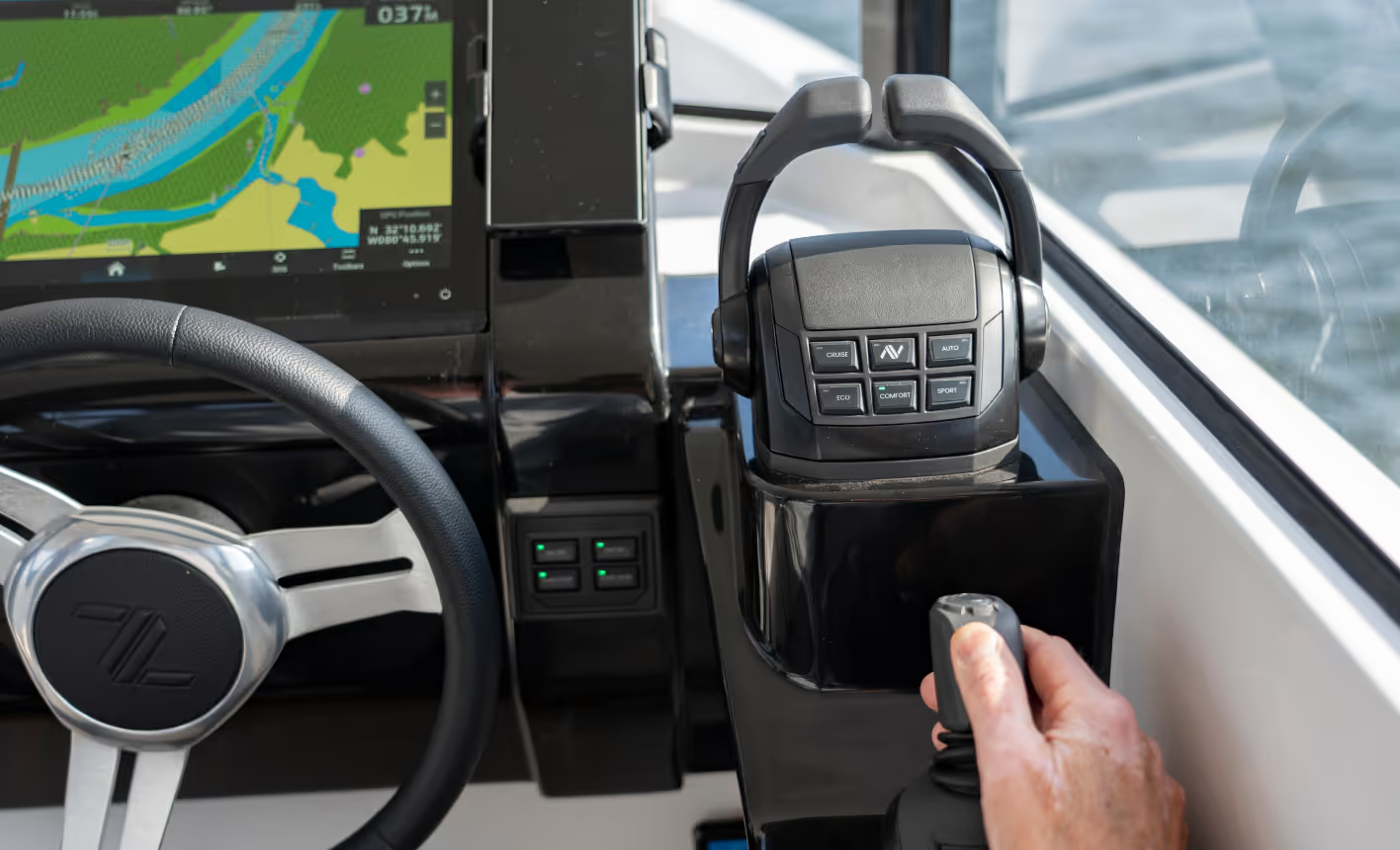
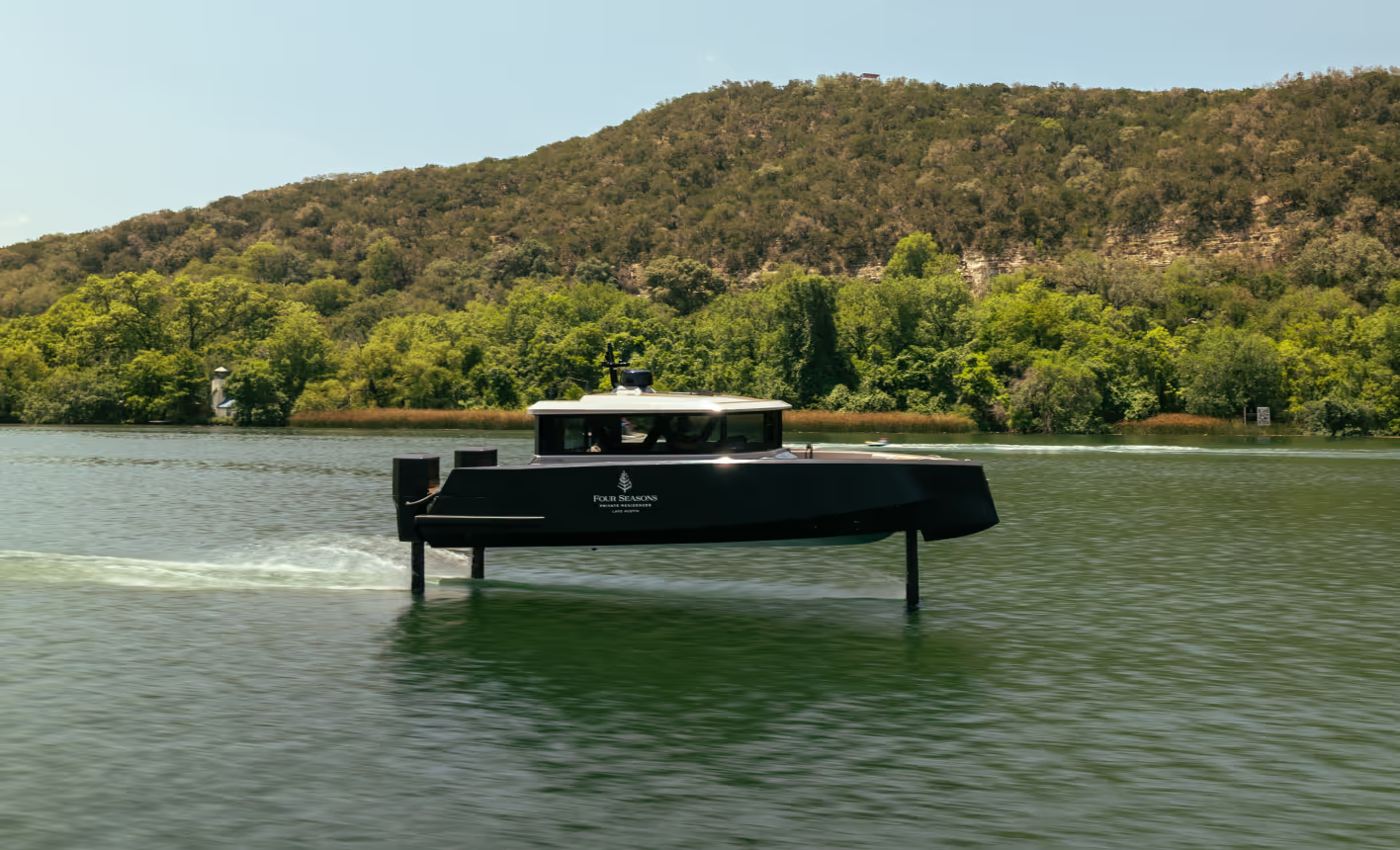
By adapting technology from automotive and aerospace, we are making electric hydrofoiling more efficient and accessible. The N30 Pioneer Edition demonstrates the performance and potential of this approach.
Beyond the vessel, we are rethinking how boats are designed, built, and deployed. We are developing smarter systems, autonomous capabilities, and the foundations of a new maritime technology stack.
Our work starts with coastal markets, but the vision goes further: high-speed, zero-emission transport anywhere on the water. We are building a new foundation for maritime technology by rethinking boats, systems, and oceans from first principles.
The Navier Doctrine is our roadmap. It explains the reasoning behind our designs, the choices shaping our products, and the future we are creating for high-speed coastal mobility, resilient maritime defense, and global maritime transformation.


Our Vision
A world where the waterways are the highways of tomorrow.
Navier Principal Team
.png)
Sampriti Bhattacharyya, PhD, is the founder and CEO of Navier, a next generation company creating zero-emission marine vessels. The company's N30 is America's first electric hydrofoiling boat and the world's longest-range electric vessel, operating 10x more efficiently than gas-powered boats.
With a PhD in Mechanical Engineering from MIT and deep career experience in aerospace and maritime with NASA, Fermilab, and TIFR, she pioneered innovations in robotics, AI, and underwater drones through her previous venture, Hydroswarm. Moving from India to America at the age of 20 armed with $200, Bhattacharyya has broken barriers in industries with traditionally limited female representation. She is an advocate for women in STEM fields and has been involved in various initiatives, including Code.org.

Kenny Jensen, Ph.D., earned his undergraduate degree in physics at MIT and his doctorate at UC Berkeley. His career has focused on advancing control systems, autonomy, and electric vehicles. At Makani, a Google[X] and ARPA-e project harnessing wind energy with autonomous drones, he led the flight controls team, developing the system for a 2-ton, 26-meter wingspan drone that generated 600 kW of power. He then led the vehicle controls team at Uber ATG, designing a safety-critical system that enabled fully-loaded autonomous semi-trucks to operate for hundreds of miles without driver intervention. More recently, at Kittyhawk, he headed flight controls for the Heaviside project, an innovative single-passenger e-VTOL aircraft combining helicopter-like hovering with fixed-wing efficiency. Now, as CTO of Navier, he is driving the future of maritime mobility with autonomous, electric hydrofoil boats.

Paul Bieker’s career in Naval Architecture is characterized by deep involvement with both the design and construction of high-performance composite craft.
He gained many of his skills during a 10 year period of sailing, designing and building high technology composite International 14 racing skiffs, which included his first forays into hydrofoil design and construction and lead to a long involvement in the Americas Cup.
Bieker was a primary structural designer/engineer for the Oracle America’s Cup Teams competing in the 31st through 35th America’s Cups (two of which won the Cup).
Bieker was a consulting engineer for the Luna Rossa Pirelli Prada America’s Cup Team in its campaign for the 37th America’s Cup.
He has over 35 years of experience designing and engineering a great variety of high-performance marine craft.

